Introduction
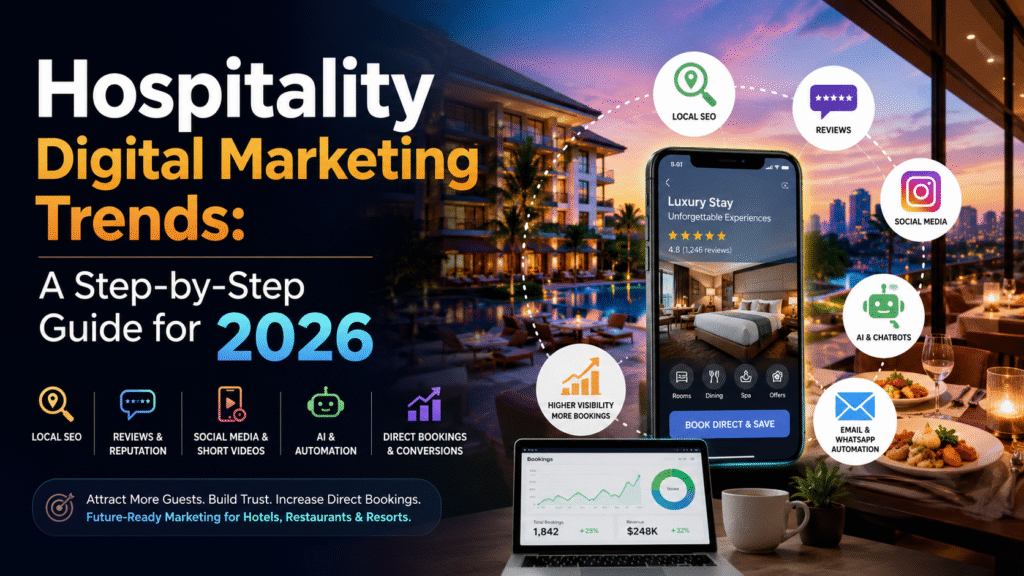
The hospitality digital marketing trends of 2026 are changing how hotels, restaurants, resorts, cafes, and travel businesses attract guests online. Today, people do not simply book the first hotel or restaurant they see. They compare reviews, check photos, watch videos, search on Google, explore Instagram, and expect instant answers before making a decision.
For hospitality brands, this means digital marketing is no longer only about posting offers or running ads. It is about building trust, improving the guest journey, creating helpful content, and using data to convert online visitors into real bookings. These hospitality digital marketing trends can help brands increase visibility, improve direct bookings, and reduce dependency on third-party platforms.
Why hospitality marketing is changing in 2026
Hospitality marketing is changing because guest behavior has become more digital, fast, and experience-focused. Travelers and diners now expect personal recommendations, mobile-friendly websites, instant replies, clear pricing, strong reviews, and smooth booking experiences. Google also recommends keeping Business Profile information complete and accurate to improve local visibility.
The biggest shift is that guests want confidence before they book. They want to know whether a hotel is clean, whether a restaurant has good ambience, whether parking is available, whether reviews are genuine, and whether the brand responds professionally. This makes guest experience marketing a major part of modern hospitality growth.
How hotels, restaurants, and resorts can use digital marketing to attract more guests
Hotels, restaurants, and resorts can attract more guests by being present across every important digital touchpoint. This includes Google Search, Google Maps, Instagram, TikTok, YouTube, review platforms, email, WhatsApp, and their own booking website.
A strong strategy should include:
- SEO and local SEO for hotels
- Social media and short-form videos
- Review management
- Paid ads for high-intent searches
- Website conversion optimization
- Email and WhatsApp automation
- AI tools and chatbots
- Clear hospitality marketing KPIs
For brands that need a complete strategy, working with a hospitality marketing agency in Dubai can help connect SEO, paid ads, content, automation, and direct booking campaigns under one plan.
Top Hotel Marketing Trends 2026
The most important hotel marketing trends 2026 are focused on personalization, AI, guest experience, sustainability, local search, and authentic content. These trends matter because hospitality customers are not just buying a room or a meal. They are buying comfort, trust, convenience, and memorable experiences.
According to SiteMinder’s 2026 hotel booking insights, travelers are changing how they research and book hotels, with OTAs, direct bookings, premium room preferences, and guest behavior becoming major strategic signals for hotels.
AI in hospitality marketing
AI in hospitality marketing is one of the biggest growth areas for 2026. Hotels and restaurants can use AI to personalize offers, predict guest needs, improve ad targeting, automate replies, and understand customer behavior faster.
AI can help hospitality brands with:
- Personalized room or package recommendations
- AI-powered ad campaigns
- Guest segmentation
- Review response assistance
- Content ideas for SEO and social media
- Smart pricing and upselling suggestions
BCG notes that AI-first hotels can improve visibility, distribution, pricing, loyalty, and operational efficiency by matching offers more closely to what guests want.
Also Read This: AI in Digital Marketing: Benefits and Challenges
Guest experience marketing
Guest experience marketing means promoting the full experience, not only the service. A hotel should not only market “rooms”; it should market comfort, location, breakfast, views, service, convenience, and the feeling guests get during their stay.
For restaurants, this means showing ambience, food presentation, chef moments, staff behavior, customer celebrations, and dining mood. When guests can imagine the experience before visiting, they become more confident and more likely to book.
Sustainability marketing hospitality
Sustainability marketing hospitality is becoming important because many modern guests prefer brands that care about the environment and local communities. Hotels and restaurants can highlight eco-friendly practices, local sourcing, waste reduction, plastic-free packaging, energy efficiency, and responsible tourism.
The key is honesty. Do not exaggerate sustainability claims. Instead, share clear actions such as locally sourced ingredients, water-saving systems, organic products, recycling efforts, or community partnerships.
UGC marketing for hospitality
UGC marketing for hospitality means using user-generated content such as guest photos, videos, reviews, testimonials, and social media tags. This content feels more natural because it comes from real customers instead of the brand itself.
UGC can include:
- Guest room tour videos
- Restaurant food photos
- Customer celebration posts
- Travel vlogs
- Review screenshots
- Tagged Instagram Stories
- Before-and-after event setup videos
UGC builds trust because future guests can see real people enjoying the experience.
Local SEO for Hotels and Hospitality Businesses
Local SEO for hotels is essential because many people search with location-based intent. Searches like “best hotel near Dubai Marina,” “restaurant near me,” “family resort in Dubai,” or “cafe near Business Bay” are high-intent searches. These users are already close to making a booking or visit decision.
A proper local SEO strategy should connect your website, Google Business Profile, reviews, local landing pages, photos, and location-based keywords. For technical optimization, brands can also explore professional Local SEO services in Dubai to improve search performance.
Optimizing Google Business Profile for hotels and restaurants
Google Business Profile helps businesses appear on Google Search and Maps. Google says businesses can personalize their profile with photos, offers, posts, and more to turn people who find them into customers.
For hospitality businesses, your profile should include:
- Correct business name, address, and phone number
- Updated opening hours
- High-quality photos and videos
- Menu, services, rooms, or amenities
- Booking or reservation links
- Regular posts and offers
- Review responses
- Accurate category selection
Using location-based keywords to attract nearby guests
Location-based keywords help Google understand where your business serves customers. A hotel should use keywords related to city, area, landmark, airport, beach, business district, or tourist destination.
Examples include:
| Business Type | Keyword Example |
| Hotel | luxury hotel near Dubai Mall |
| Restaurant | Italian restaurant in Downtown Dubai |
| Resort | beach resort in UAE |
| Cafe | family cafe near Jumeirah |
| Event venue | wedding venue in Dubai |
These keywords should be used naturally in website content, meta titles, headings, image alt text, blogs, and local landing pages.
Getting more reviews to improve local visibility
Reviews play a major role in hospitality trust. Google allows verified businesses to read and reply to reviews from their Business Profile, which helps brands manage guest feedback professionally.
Hotels and restaurants should ask happy customers for genuine reviews after a positive experience. Reply to every review politely, mention the service used, and thank the guest naturally. Avoid fake reviews because they can damage trust and create long-term ranking risks.
Also Read This: Local SEO for Small Businesses: A Complete Guide
Social Media Trends in Hospitality Marketing
Social media is one of the most visual parts of hospitality digital marketing trends. People want to see food, rooms, views, ambience, celebrations, staff moments, and real guest experiences before they decide where to visit or stay.
For hospitality businesses, social media should not be random posting. It should be planned around awareness, trust, bookings, and repeat visits.
Instagram marketing for restaurants
Instagram marketing for restaurants works well because food, ambience, and customer experiences are highly visual. Restaurants can use Instagram Reels, Stories, carousels, highlights, and influencer collaborations to attract nearby customers.
Good Instagram content ideas include:
- Dish preparation videos
- Chef recommendations
- Customer birthday celebrations
- New menu launches
- Behind-the-scenes kitchen clips
- Weekend offers
- Table setup and ambience videos
- Customer testimonials
Restaurants should also add location, menu link, reservation link, contact number, and clear highlights so visitors can take action quickly.
Short-form videos, Reels, and behind-the-scenes content
Short-form videos are powerful because they show the real experience quickly. A 10-second video of a room view, breakfast buffet, mocktail preparation, or rooftop dinner can create more impact than a long written post.
User-generated content to build trust and bookings
User-generated content helps hospitality brands look more authentic. Instead of only posting polished brand videos, share real guest moments, tagged posts, review screenshots, and customer stories.
Use UGC for:
- Social proof
- Website testimonials
- Instagram highlights
- Paid ad creatives
- Email campaigns
- Restaurant and hotel landing pages
Always take permission before using customer photos or videos in ads or website content.
AI, Chatbots, and Automation in Hospitality Marketing
AI, chatbots, and automation are among the strongest hospitality digital marketing trends because they improve speed, personalization, and guest communication. In hospitality, delayed replies can mean lost bookings. Automation helps brands respond faster without losing the human touch.
Hotel chatbot marketing for faster guest support
Hotel chatbot marketing helps hotels answer common guest questions instantly. Chatbots can support bookings, check-in queries, room availability, amenities, directions, FAQs, and upsell offers.
EHL explains that hotel chatbots can handle reservations, booking modifications, check-in questions, amenities, local recommendations, upselling, loyalty queries, troubleshooting, and feedback collection.
A hotel chatbot should help with:
- Room availability
- Booking changes
- Check-in and check-out time
- Airport transfer questions
- Restaurant or spa bookings
- Upgrade suggestions
- Human support escalation
Hospitality marketing automation for emails, offers, and follow-ups
Hospitality marketing automation helps brands send the right message at the right time. Hotels can send booking confirmations, pre-arrival offers, upgrade options, post-stay review requests, and loyalty campaigns automatically.
Restaurants can automate birthday offers, table reservation reminders, abandoned inquiry follow-ups, private event promotions, and repeat-visit campaigns. For this, brands can use email marketing services in Dubai to build segmented campaigns.
Voice search optimization for hotels
Voice search optimization for hotels is important because people ask conversational questions on mobile and smart devices. They may search, “Which hotel near me has free breakfast?” or “Best family hotel near Dubai airport.”
To optimize for voice search:
- Add FAQ sections
- Use natural question-based headings
- Include local keywords
- Keep answers short and clear
- Add schema markup
- Optimize Google Business Profile
- Keep room, service, and amenity details updated
Hotel Marketing Tools Every Hospitality Brand Should Use
The right hotel marketing tools help brands save time, measure results, and improve decision-making. Tools are useful only when they are connected to clear goals like bookings, calls, reservations, reviews, or repeat visits.
SEO and local SEO tools
Hospitality brands should use SEO tools to track rankings, search queries, website traffic, page speed, and local visibility.
Useful tool categories include:
- Google Search Console
- Google Analytics 4
- Google Business Profile
- Keyword research tools
- Rank tracking tools
- Page speed tools
- Review monitoring tools
A fast, mobile-friendly website is also important. Our blog on responsive website development services in Dubai explains why mobile-first websites matter for SEO, user experience, and conversions.
Social media and content planning tools
Social media tools help hotels and restaurants plan content, schedule posts, track engagement, and manage campaigns. These tools are useful for Instagram, Facebook, TikTok, LinkedIn, and YouTube Shorts.
Content planning should include:
- Reels calendar
- Seasonal offers
- Guest stories
- UGC posts
- Influencer collaborations
- Festival campaigns
- Review-based content
Email, CRM, chatbot, and review management tools
CRM and automation tools help hospitality brands manage guest data, send personalized offers, and improve repeat bookings. Review management tools help track guest sentiment across Google, TripAdvisor, OTAs, and social media.
For hotels and restaurants, the best setup includes:
| Tool Type | Main Use |
| CRM | Guest profiles and segmentation |
| Email tool | Offers and follow-ups |
| Chatbot | Instant guest support |
| Review tool | Reputation management |
| Analytics tool | KPI tracking |
| Booking engine | Direct reservations |
Hospitality Marketing KPIs to Track
Hospitality marketing KPIs help you understand whether your strategy is working. Without tracking, a hotel or restaurant may spend money on ads, social media, and content without knowing what actually brings bookings.
Website traffic and direct bookings
Track how many people visit your website and how many complete a booking, call, form submission, or reservation. Direct bookings are especially important because they reduce dependency on OTAs and improve profit margins.
Conversion rate and cost per booking
Conversion rate shows how many visitors become customers. Cost per booking shows how much you spend to get one confirmed booking or reservation.
Important KPIs include:
- Website sessions
- Booking conversion rate
- Cost per booking
- Cost per lead
- Return on ad spend
- Form submissions
- Calls from website
- WhatsApp inquiries
Review rating, engagement rate, and repeat bookings
Hospitality businesses should also track review rating, review volume, Instagram engagement, email open rate, repeat customer rate, and guest satisfaction score.
These KPIs show whether your marketing is building trust, not just traffic.
Hospitality Marketing Examples That Actually Work
The best hospitality marketing examples are simple, practical, and connected to guest intent. A successful campaign does not always need a huge budget. It needs the right message, strong visuals, correct targeting, and a smooth booking path.
Example 1: Hotel using local SEO to increase bookings
A hotel creates landing pages for “business hotel near Dubai World Trade Centre,” “family hotel near Dubai Mall,” and “hotel with airport transfer in Dubai.” It optimizes Google Business Profile, adds fresh photos, collects reviews, and publishes local travel blogs.
This improves visibility for high-intent searches and brings guests who are already looking for that location.
Example 2: Restaurant using Instagram Reels to attract customers
A restaurant posts short Reels showing signature dishes, chef plating, happy customers, weekend ambience, and limited-time offers. Each post includes location, booking CTA, menu link, and hashtags related to the area.
This improves discovery and helps turn social media viewers into real visitors.
Example 3: Resort using UGC and sustainability content to build trust
A resort encourages guests to share photos, tags, and short videos. It also posts sustainability content showing local sourcing, eco-friendly practices, and community support.
This builds emotional trust and helps guests feel connected to the brand before booking.
Final Checklist for Hospitality Digital Marketing Success
The best way to apply hospitality digital marketing trends is to turn them into a simple monthly action plan. Do not try to do everything at once. Start with the channels that bring the most direct impact: SEO, local search, reviews, website experience, and social media.
SEO checklist
- Optimize website pages with target keywords
- Add location-based landing pages
- Improve page speed and mobile experience
- Add FAQs and schema markup
- Create helpful hospitality blogs
- Build internal links to service pages
- Track rankings and organic traffic
For website improvements, a professional website development company in Dubai can help build a faster and more conversion-focused hospitality website.
Social media checklist
- Post Reels consistently
- Show real guest experiences
- Use UGC and testimonials
- Add clear booking CTAs
- Collaborate with micro-influencers
- Promote seasonal offers
- Track saves, shares, comments, and inquiries
Automation and guest experience checklist
- Add chatbot support
- Create email automation
- Send pre-arrival messages
- Follow up after visits
- Ask for genuine reviews
- Segment guests by interest
- Track bookings, repeat visits, and satisfaction
Conclusion: Future of Hospitality Digital Marketing in 2026
Hospitality digital marketing in 2026 is no longer about only running ads or posting attractive photos. It is about creating a complete online journey where guests can discover your brand, trust your service, compare options, ask questions, book easily, and return again.
The most important hospitality digital marketing trends include AI, local SEO, guest experience marketing, UGC, automation, chatbot support, Instagram marketing, sustainability messaging, and clear KPI tracking. Hotels, restaurants, resorts, and hospitality brands that use these trends properly can improve visibility, increase direct bookings, and build stronger guest relationships.
To get better results, start with the basics. Optimize your website, improve your Google Business Profile, collect real reviews, create helpful content, use short-form videos, and track your hospitality marketing KPIs every month. When these steps work together, your digital marketing becomes more powerful, more measurable, and more profitable.
In 2026, the brands that win will be the ones that understand their guests better, communicate faster, and provide a smoother online-to-offline experience. Whether you run a hotel, restaurant, resort, cafe, or hospitality group, now is the right time to upgrade your digital marketing strategy and stay ahead of the competition.
FAQs
What are the top hospitality digital marketing trends in 2026?
The top hospitality digital marketing trends in 2026 include AI personalization, local SEO, short-form video, UGC marketing, review management, hotel chatbot marketing, marketing automation, sustainability content, and direct booking optimization.
Why is AI important in hospitality marketing?
AI is important because it helps hospitality brands personalize offers, automate replies, understand guest behavior, improve ads, and increase booking efficiency. AI in hospitality marketing also supports better guest experience and faster communication.
What are the best hotel marketing tools?
The best hotel marketing tools include Google Analytics 4, Google Search Console, Google Business Profile, CRM tools, email automation platforms, chatbot systems, review management tools, social media schedulers, and booking engines.
How can local SEO help hotels get more bookings?
Local SEO for hotels helps hotels appear when people search for nearby stays, destination hotels, or location-based accommodation. It improves visibility on Google Search and Maps, builds trust through reviews, and attracts guests who are ready to book.
How can restaurants use digital marketing to attract more customers?
Restaurants can use digital marketing by posting food videos, promoting offers, optimizing Google Business Profile, collecting reviews, running local ads, and using Instagram marketing for restaurants. Short-form videos, customer testimonials, menu highlights, and location-based keywords can help restaurants attract nearby customers.
What is guest experience marketing in hospitality?
Guest experience marketing means promoting the complete customer experience instead of only the product or service. For hotels, it includes comfort, rooms, service, location, views, food, and convenience. For restaurants, it includes ambience, food quality, staff behavior, presentation, and overall dining experience.
Why is UGC marketing important for hospitality businesses?
UGC marketing for hospitality is important because real guest photos, videos, reviews, and social media posts build trust. Future customers are more likely to believe real experiences shared by other guests than only branded promotional content.